Eden Richter · 14 October 2026
Tracing the Evolution of Organic Visibility Signals Across Multi-Update Cycles via Timestamped Audit Trails
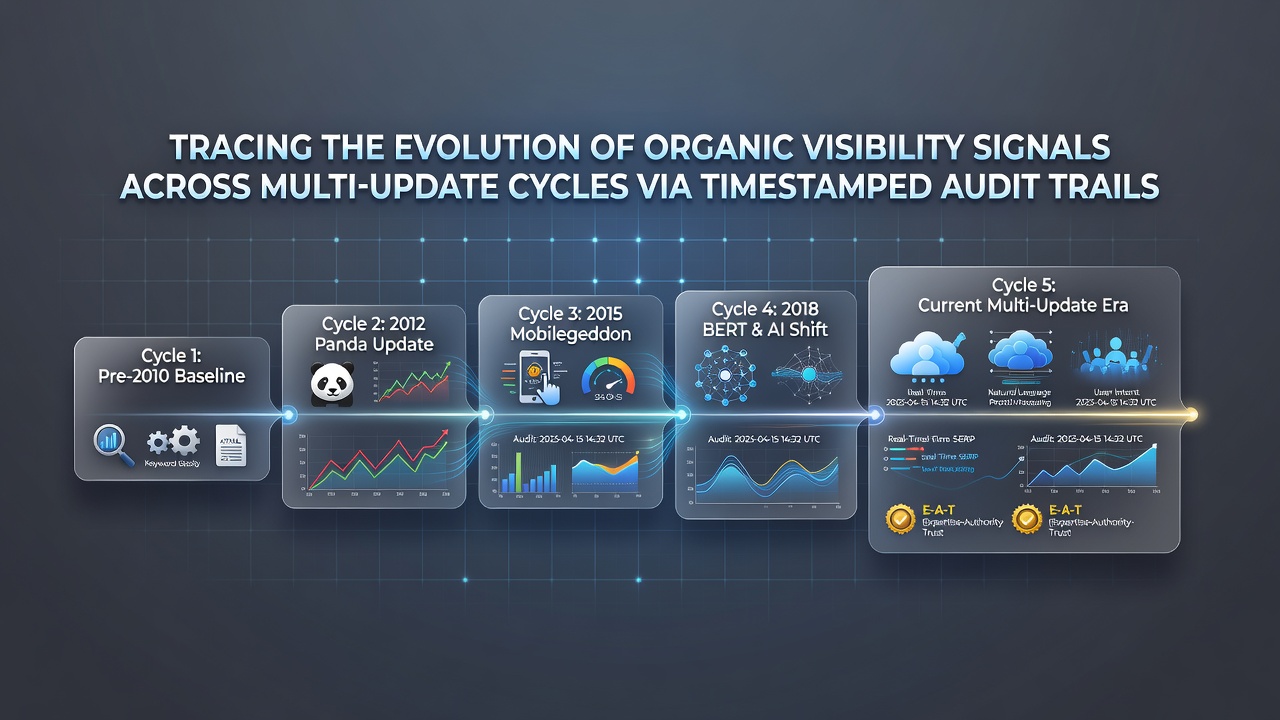
Organic visibility signals shift through successive search engine updates, and timestamped audit trails provide a structured method for tracking those changes across extended periods. Researchers compile data points from ranking fluctuations, content performance metrics, and indexation patterns, then align each entry with precise dates to reveal cause-and-effect relationships that span multiple algorithm revisions.
Core Components of Timestamped Audit Trails
Audit trails record every measurable indicator at fixed intervals, including click-through rates, dwell times, backlink acquisition dates, and crawl frequency logs, while each record carries a UTC timestamp that allows direct comparison against known update windows. Data aggregation platforms pull information from server logs, third-party analytics suites, and search console exports, then store entries in chronological order so analysts can isolate the impact of one update before the next arrives.
Those who maintain these trails often segment records by update type, separating core algorithm revisions from narrower adjustments such as spam detection refreshes or local search modifications. Segmentation reduces noise when researchers examine how visibility signals respond to cumulative changes rather than isolated events.
Multi-Cycle Analysis Methods
Analysts compare visibility metrics before and after each documented update by calculating delta values for key indicators, then plot those deltas against the timeline to identify recurring patterns. Long-term trails spanning three or more update cycles show whether certain signals recover quickly after one revision yet remain suppressed following another, revealing dependencies that single-cycle studies miss.
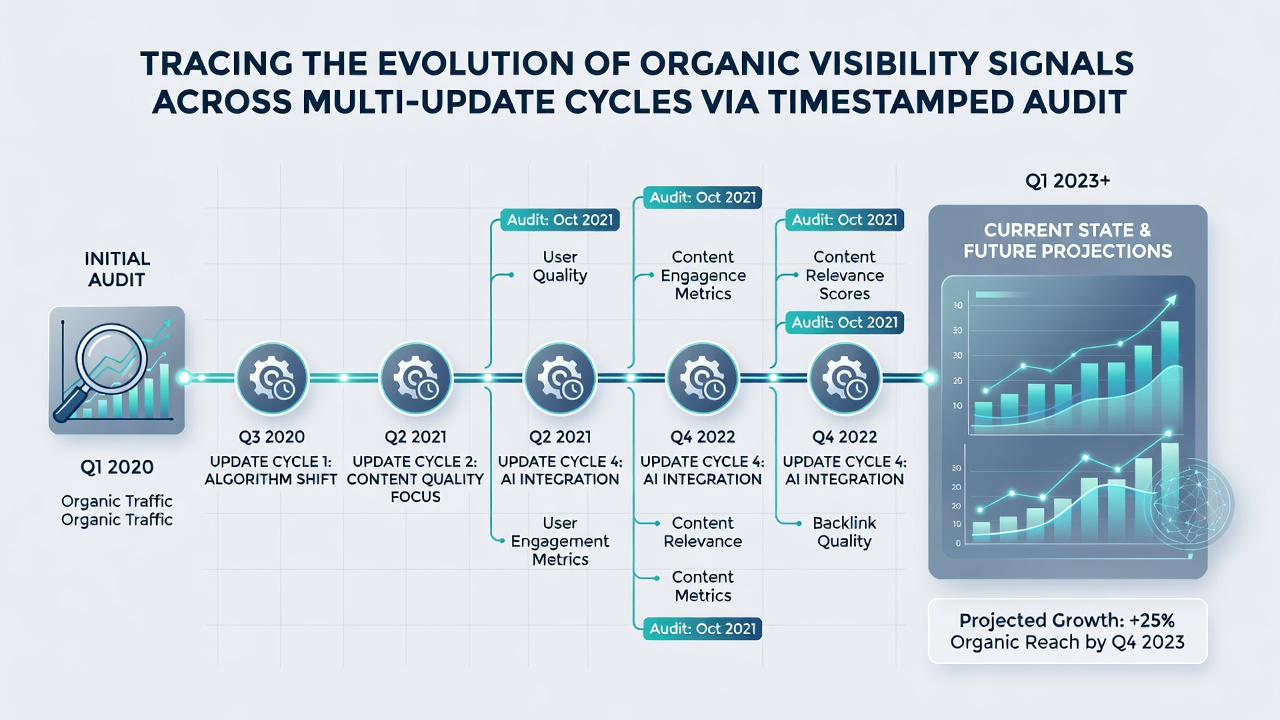
Cross-referencing trails with public announcements from search providers supplies additional context, since official statements sometimes list affected signal categories even when full technical details remain undisclosed. In October 2026 several monitoring services reported measurable shifts in featured snippet inclusion rates that aligned with an unannounced core update, and timestamped records allowed teams to confirm the exact onset within a 48-hour window.
Practical Implementation Steps
Teams begin by establishing baseline snapshots at regular intervals, typically weekly or bi-weekly, then increase frequency during periods when industry observers anticipate major revisions. Automated scripts capture raw data from multiple sources and append timestamps automatically, while manual reviews verify consistency across different reporting tools. The resulting dataset supports queries that isolate signals such as mobile-first indexing adjustments or passage ranking modifications and trace their influence through subsequent cycles.
Visualization layers convert timestamped entries into trend lines and heat maps, allowing observers to spot convergence points where multiple signals move in tandem. These visualizations highlight periods when visibility gains achieved after one update erode during the next, prompting further investigation into content or technical factors that lost relevance.
Data Sources and Validation
Validation draws on cross-checks between internal server metrics and external benchmarks published by organizations such as the European Commission digital services reports and academic studies indexed by the Association for Computing Machinery. Discrepancies trigger additional data pulls to confirm whether observed changes stem from actual ranking shifts or from measurement artifacts introduced by reporting platform updates.
Longitudinal studies benefit when teams retain raw audit files in immutable formats, preserving original timestamps even after later processing steps aggregate or normalize values. This practice supports retrospective audits years after the events, when new research questions arise about signal evolution across previously unexamined update sequences.
Conclusion
Timestamped audit trails convert scattered visibility observations into coherent narratives that span multiple update cycles. Systematic recording and chronological alignment enable precise attribution of ranking changes to specific revisions, while continued refinement of collection methods supports increasingly granular analysis of organic search dynamics.