Greta Keller · 28 October 2026
Leveraging API Connections to Merge Competitor Analysis Data from Multiple Sources in SEO Workflows
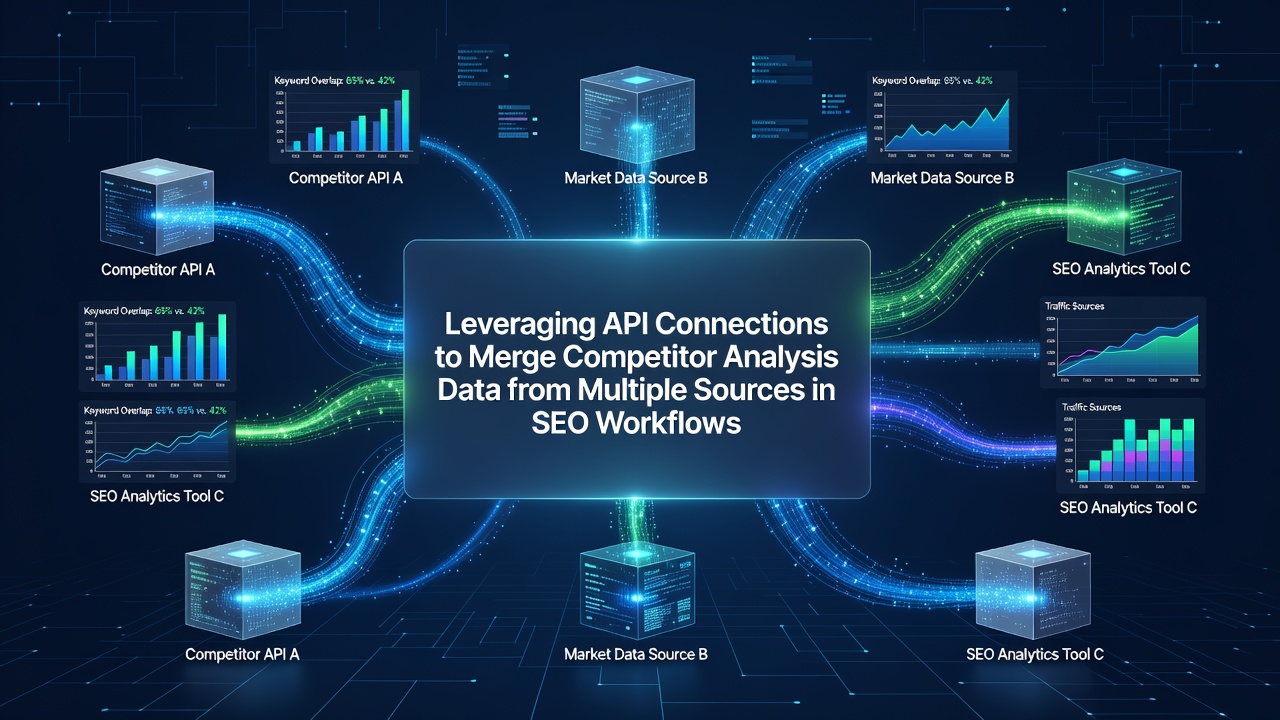
Competitor analysis in SEO relies on pulling structured information from various platforms through their application programming interfaces, which allows teams to combine metrics on keyword rankings, backlink profiles, and traffic estimates without manual exports. Researchers at academic institutions have documented how these connections reduce duplication errors that arise when data arrives in separate CSV files from different vendors. Data shows that professionals who establish direct API links between tools such as search analytics platforms and third-party ranking trackers can maintain a single dataset updated on hourly or daily schedules rather than weekly batches.
Core Components of API-Driven Data Aggregation
APIs from major SEO platforms expose endpoints for keyword difficulty scores, domain authority estimates, and organic visibility indices, while government statistical agencies publish broader digital economy indicators that provide context for regional search trends. One study from a European research consortium found that organizations connecting at least three distinct data sources through authenticated API calls recorded a measurable drop in reporting inconsistencies compared with spreadsheet-based workflows. The process typically begins with OAuth or key-based authentication, followed by scheduled queries that pull raw JSON responses into a central database or data warehouse.
Observers note that mapping fields across sources requires consistent schema definitions because one platform may label organic impressions differently from another, yet both values contribute to the same visibility calculation once normalized. Automated scripts handle the transformation steps, converting timestamps to a common format and reconciling currency values when traffic estimates include paid-search overlap. Those who have implemented these pipelines report that initial setup time averages several days, after which incremental updates run with minimal intervention.
Handling Synchronization Across Platforms
Real-time merging becomes feasible once APIs support webhook notifications or frequent polling intervals, allowing changes in a competitor's ranking to appear alongside updated backlink counts within the same dashboard. Figures from industry reports indicate that synchronization latency drops below fifteen minutes for most commercial tools when queries are batched efficiently. Challenges surface when rate limits differ between providers, forcing developers to implement queuing logic that respects each endpoint's constraints while still delivering a unified view.
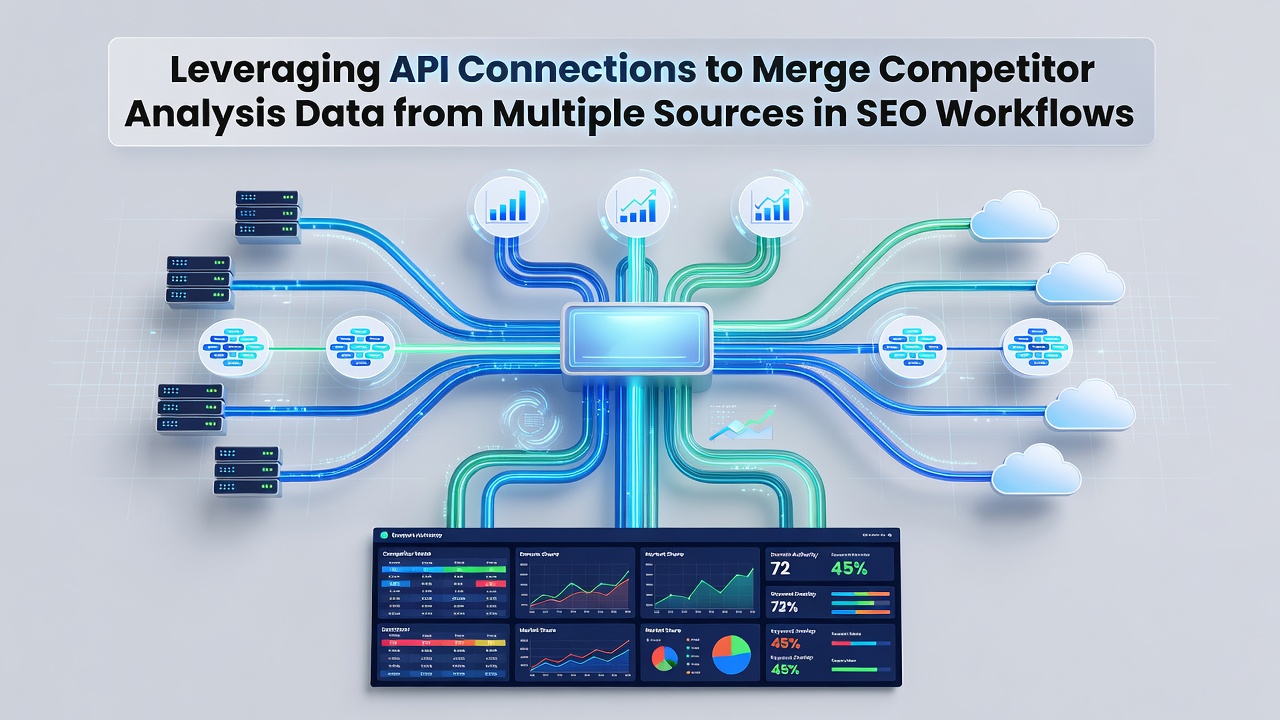
Canadian digital infrastructure studies highlight similar patterns in other analytics domains, where cross-platform alignment improves decision speed once the underlying data models align. In SEO contexts the same principle applies: teams combine search-volume estimates from one source with click-through-rate benchmarks from another, then layer in crawl-budget metrics from a third. The resulting dataset supports queries that would otherwise require repeated manual joins. Experts have observed that maintaining an audit log of each API response helps trace discrepancies back to their originating service when rankings shift unexpectedly.
Practical Implementation Patterns Observed in 2025-2026
By October 2026 many enterprise SEO teams had adopted orchestration frameworks that manage authentication tokens, retry failed requests, and store intermediate results in cloud object storage before final aggregation. Academic papers on data integration note that these frameworks often incorporate schema-on-read approaches, letting analysts explore merged tables without predefined column mappings for every new data source. One documented workflow connects a major search engine's public performance API with two commercial competitor intelligence services, producing daily snapshots that feed both executive dashboards and automated alert systems.
Industry organizations tracking digital marketing technology adoption have recorded rising use of open-source libraries that abstract common API patterns, thereby shortening the time required to add a new data provider. When a fourth source becomes available, the existing transformation layer accepts the additional stream after only minor configuration changes. This modularity proves especially useful during periods of rapid algorithm updates, because fresh ranking signals can be incorporated without rebuilding teh entire pipeline.
Conclusion
API connections now form the backbone of competitor analysis in SEO because they enable consistent, timely merging of metrics drawn from multiple specialized platforms. Organizations that invest in robust authentication, schema normalization, and scheduling logic gain access to unified datasets that support deeper comparative queries. Evidence from research institutions and digital economy reports confirms that these technical patterns continue to spread as more platforms expose structured data endpoints and as teams refine their orchestration methods. The outcome is a workflow in which competitor movements surface alongside internal performance indicators without the friction once associated with manual data handling.